A kilo of organic açaí costs roughly three times more than conventional açaí before it even leaves Brazil. That price difference follows the berry across the Atlantic, through customs, into freezers, and eventually onto your bowl at our Dubai Marina, Sheikh Zayed Road, or Motor City locations. So what exactly are you paying for, and does it actually matter?
What Organic Certification Actually Means in Practice
Organic certification is not a marketing badge. It is a paper trail that starts in the soil and follows every step of production. For a product to carry organic status in the UAE, it must meet standards set by recognised bodies like USDA Organic, EU Organic, or Brasil Orgânico. These certifications require annual inspections, soil testing, and documentation of every input used in farming.
For açaí, this means the palm trees cannot be treated with synthetic pesticides or fertilisers. The surrounding forest cannot be cleared or chemically managed. Every processing facility, from the initial pulping in Pará to the final packaging, must maintain separation between organic and conventional products. Cross contamination at any stage voids the certification.
This is expensive. Farmers need separate equipment. Processors need dedicated production lines. Shipping requires isolated cold chain logistics. When you see organic food Dubai prices sitting 40 to 60 percent higher than conventional alternatives, that gap reflects real operational costs, not premium branding.
Why Organic Matters More for Açaí Than Most Foods
Not all organic products carry the same weight. A conventional apple might have pesticide residue on its skin. You can wash it. Açaí is different.
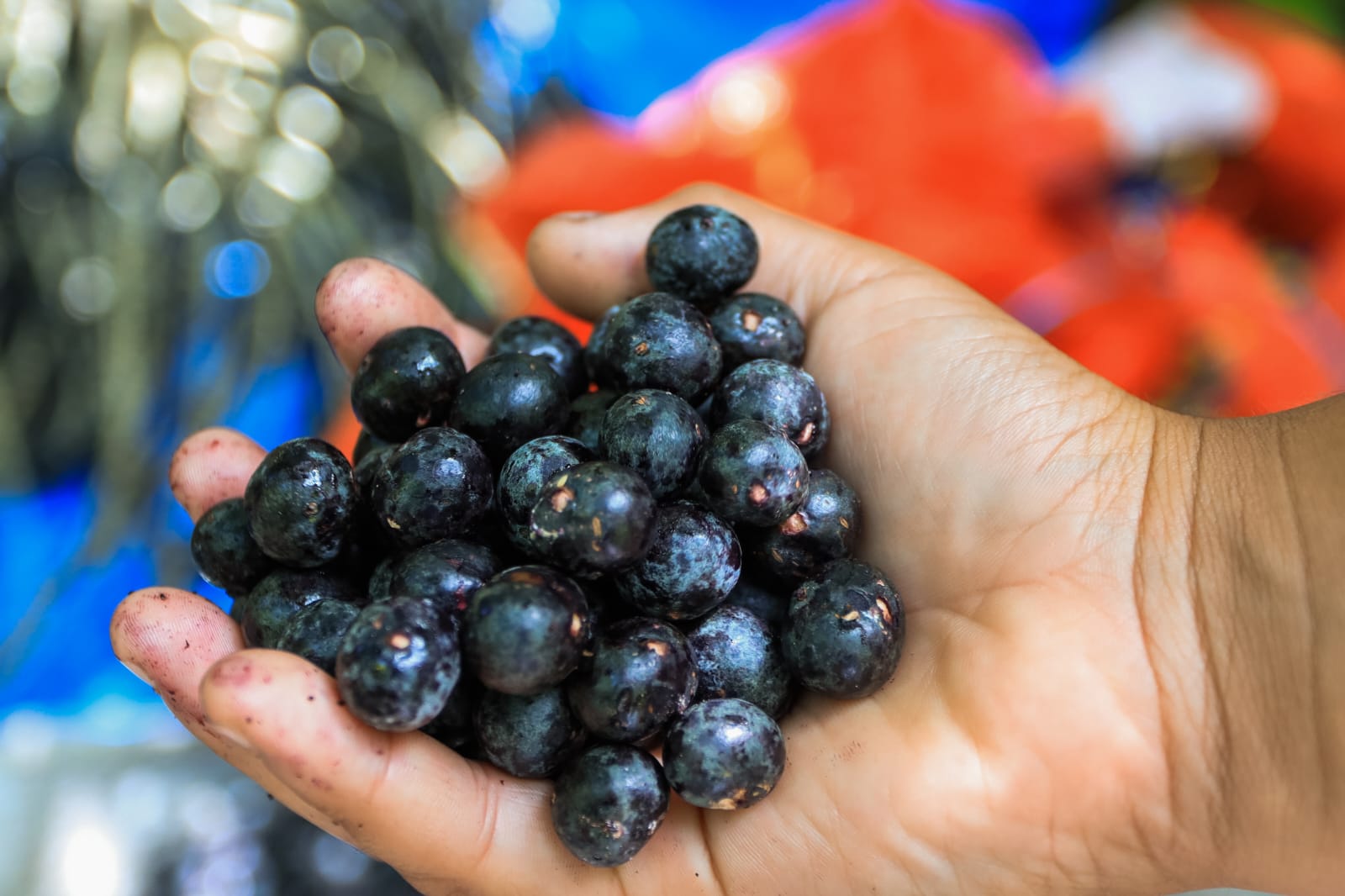
The açaí berry grows in clusters high on Euterpe oleracea palms in the Amazon floodplains. These palms stand in an ecosystem so dense and interconnected that whatever enters the soil enters everything. Conventional açaí farming often involves clearing competing vegetation and applying herbicides to increase yield. Those chemicals do not stay in the soil. They move through groundwater, into the palms, and concentrate in the berries.
Our 100% organic fair trade açaí from Pará, Brazil comes from palms grown within intact forest systems. No clearing. No chemical inputs. The certification guarantees that the ecosystem remains whole, which matters because açaí is not just a crop. It is the economic anchor that keeps local communities invested in protecting standing forest rather than converting it to cattle pasture.
This is why 5% of every purchase protects the Amazon rainforest in Pará, Brazil. The organic certification protects the product. The reinvestment protects the place it comes from.
Fair Trade Adds Another Layer
Organic certification covers environmental standards. Fair trade certification covers human ones. The two often travel together, but they are not the same.
Fair trade food Dubai options are still relatively rare because the certification requires direct relationships with producer cooperatives, minimum price guarantees regardless of market fluctuations, and investment in community development funds. For our açaí, this means the families harvesting berries along the Rio Tocantins receive stable income even when global commodity prices drop.
When you order an Original Açaí Bowl for AED 42 at our Sheikh Zayed Road location, roughly AED 2.10 goes directly to Amazon protection programs. Another portion funds the fair trade premium that builds schools and health posts in Pará. These are not abstract charity contributions. They are built into the supply chain.
Is Organic Açaí Dubai Worth the Cost?
Here is the honest answer. If you are eating açaí once a year, the organic premium probably will not change your health outcomes. Pesticide exposure is cumulative. Occasional consumption of conventional produce is not a significant risk factor for most people.
But if açaí is part of your regular healthy eating Dubai routine, the calculation shifts. You are consuming those berries multiple times per week. Whatever is in them accumulates. Organic certification becomes less about ideology and more about reducing your chemical load over time.
There is also the question of what your money supports. Conventional açaí farming drives deforestation. Organic açaí farming incentivises forest preservation. Every bowl has consequences beyond what ends up in your stomach.
At Projeto Açaí, we stock only organic fair trade açaí because we believe the berry and the forest it comes from are inseparable. You can taste it at Dubai Marina, Sheikh Zayed Road, or Motor City.