Most people who eat açaí outside Brazil have only ever had one version of it: the frozen, blended, sweetened bowl topped with granola and banana that appeared in health cafés and spread globally. This version is delicious and nutritious. But it bears almost no resemblance to how the communities who have eaten açaí for generations actually consume it.
Understanding the original context of açaí changes how you think about the food. And it explains why, at Projeto Açaí, we care so much about sourcing it directly from the people who grow it.
The Açaí of Belém
In Belém, the capital of Pará state at the mouth of the Amazon river, açaí is not a health food trend. It is a daily staple eaten at almost every meal. The city consumes more açaí per capita than anywhere on earth, and it does so in a form that would surprise most international consumers.
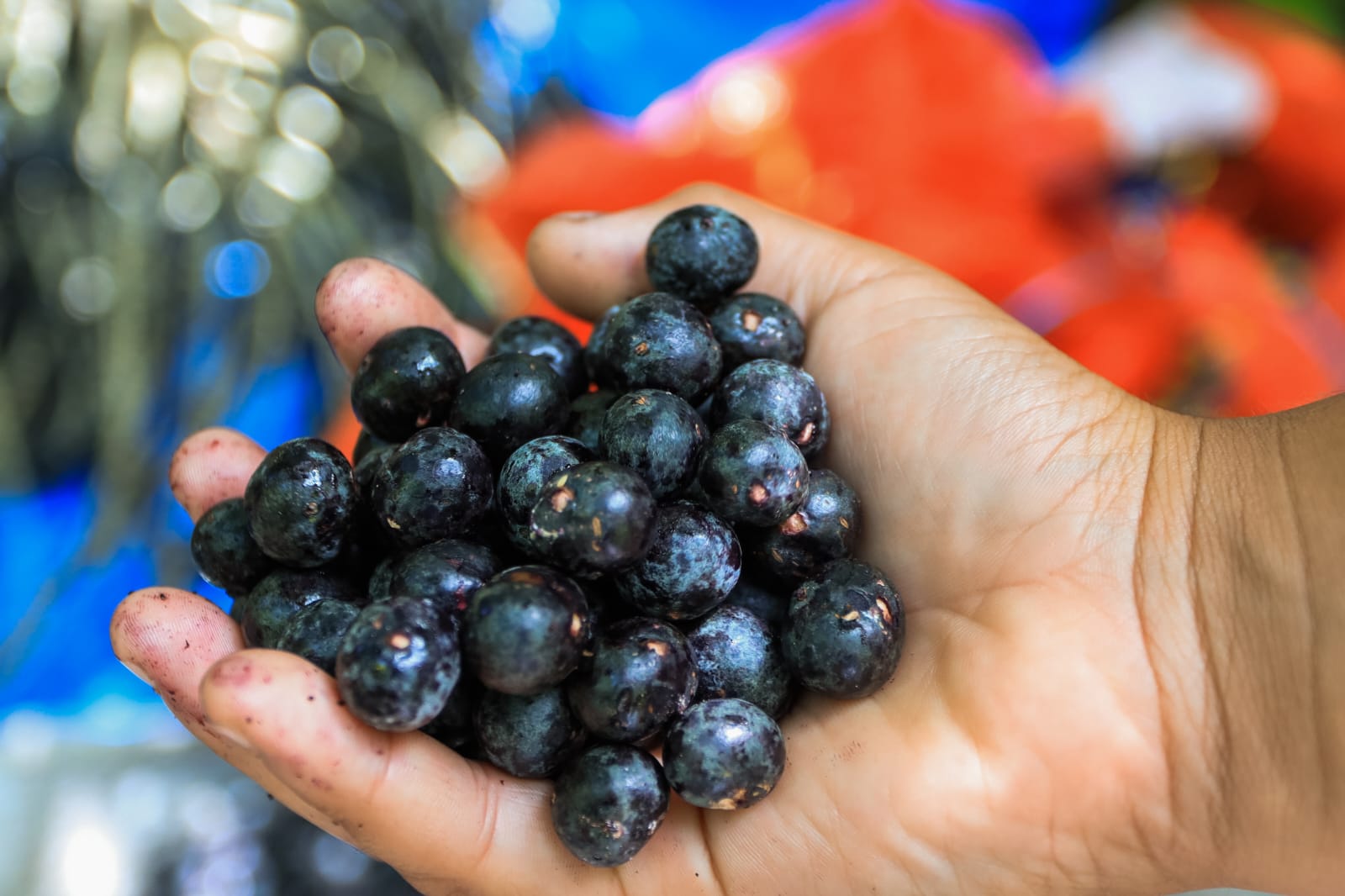
Traditional Amazonian açaí is served thick, dark purple, and completely unsweetened. The consistency is closer to a dense paste than a smoothie. It is scooped from a bowl or eaten from a gourd. It has a strong, earthy flavour with pronounced bitterness and almost no sweetness at all. This is the açaí in its most concentrated form, closest to the raw berry.
The most common combination in Belém is açaí eaten alongside tapioca, dried shrimp, or fried fish. This is not a sweet meal. It is a savoury one. The açaí provides dense calories and fat, the protein comes from the fish or shrimp, and tapioca adds carbohydrate. Together they form a complete meal that has sustained fishing and farming communities in the Amazon for centuries.
The Market Culture Around Açaí
At Ver-o-Peso market in Belém, one of the oldest markets in South America, açaí has been sold fresh every morning for hundreds of years. Vendors arrive before dawn with baskets of freshly harvested berries. The berries are processed on the spot, strained through water to produce the thick purple liquid, and sold by the litre to customers who carry it home in repurposed containers.
The social ritual around this market is as old as the trade itself. Families send someone early to secure the best açaí before it runs out. The quality of a vendor's açaí is a matter of local reputation. This is how the berry has been traded, consumed, and celebrated in the Amazon for as long as anyone can remember.
What the Brazilian Café Version Changed
When açaí moved from Belém to the beaches of Rio de Janeiro in the 1980s, it changed form. The savoury tradition of Pará did not translate to the surf culture of southern Brazil. Rio added sweetener, blended the pulp thinner, and served it cold in a bowl with banana and granola. This was an adaptation for a different market and a different climate.
The bowl version is genuinely delicious and carries much of the nutritional benefit of the original. The antioxidants, healthy fats, and fibre remain largely intact when the pulp is processed and frozen correctly. But the sugar that now comes with most commercial açaí products, and the sweetened toppings, add a dimension the original version never had.
At Projeto Açaí, we serve the bowl version because it works for Dubai, the same way it worked for Rio. But our açaí is unsweetened, and we source it from the same Pará region where the food was born. The origin matters to us because it is where the story starts.